FRETILIN.Media

2010-2020: DECADE OF PEACE, STABILITY & DEVELOPMENT/DEKADA PAZ, ESTABILIDADE NO DEZENVOLVIMENTU

Media service of the FRETILIN party.
Servisu media partidu FRETILIN nian.

Contacts/contactus:

Deputadu Jose Teixeira
Tel. Mobile: +670 728 7080
Email: fretilin.media@gmail.com

Wednesday, February 8, 2012

The Making of Lu Olo (By Sahe Da Silva)


The Making of Lu Olo

By Sahe Da Silva

“Viva Doutor Lu Olo!” (Long Live Doctor Lu Olo!), shouted the raucous crowd who had gathered at the Central Committee of FRETILIN in Comoro, Dili on 13 January 2012 to hear Francisco Guterres Lu Olo, the current President of FRETILIN, confirm that he would be running as a candidate in this year’s March 17 presidential elections.  I couldn’t help but smile at the symbolism of combining the term “Doctor”- a title recognising Lu Olo’s completion of his law degree - with “Lu Olo”- a code name from the resistance, particularly given that some people in the 2007 presidential elections had unfairly cited his lack of formal qualifications as a reason to vote against him in the second round.  Not that Lu Olo would care that much anyway whether you called him Doctor Lu Olo or Lu Olo as he knows better than most that it is what you do and not a title that defines you as a person.

Lu Olo’s emergence as a national leader following the restoration of independence provides a very interesting lesson in leadership.  History has shown, on many occasions, that there is no set formula no magic combination to explain what makes a successful leader.  Some people are born natural leaders, others become leaders after intensive training and others still evolve into successful leaders as they deal with the trials and tribulations, the successes and failures, of life.  Lu Olo’s leadership story falls very much into the last category as a person who matures and his character strengthens with the passing of time.

However, to understand Lu Olo, to understand the journey that has made the man and why he is one of the frontrunners in this year’s presidential elections, one has to go back to that fateful day in 1975 when Indonesia invaded Timor-Leste.  At the time, Lu Olo was 21 years old and a primary school teacher at St. Terezinha College in Ossú.  He was forced to flee to the mountains where he joined an army platoon under the command of Lino Olokassa.  He was to spend the entire Indonesian military occupation (1975-1999) in the mountains as a resistance fighter and a political activist, surviving the annihilation and encirclement campaign of the late 1970s and the Indonesian military assaults of the early 1980s where many of his friends and family members were killed.  His first wife, Clotilde Maria de Fatima, was killed on 15 November 1981 in Builó in Viqueque, an event that was to scar him so badly that he only remarried after independence.

During his time in the resistance Lu Olo held various positions within FRETILIN such as secretary for the eastern coast region in Matebian (1976), delegate commissar for the eastern point sector (1978) and national political commissar (1984).  In 1987 when the resistance was re-structured with the creation of the National Council of Maubere Resistance (CNRM) and the appointment of Xanana Gusmao as CNRM’s leader, Ma’Huno was appointed the Secretary of the Directive Commission of FRETILIN- the highest political organ of the party- whilst Lu Olo, Ma’Hodu and Nino Konis Santana were appointed as Deputy Secretaries.

In the years that followed the formation of CNRM, Xanana Gusmao (1992), Ma’Hodu (1992) and Ma’Hunu (1993) were captured by the Indonesian military and either sent to an Indonesian prison, as was the case with Xanana, or released into the civilian population under tight surveillance, as was the case with Ma’Huno and Ma’Hodu.  Then in 1998, Konis Santana, who replaced Ma’Huno as the leader of FRETILIN in 1993, died from illness.

It remains little known that following Santana’s death in 1998 Lu Olo wrote to the External Delegation of FRETILIN requesting that the leadership of FRETILIN be transferred to the External Delegation.  The request was refused by Marí Alkatiri, the leader of the External Delegation, and not for the first time the External Delegation made it clear that leadership of FRETILIN- no matter how difficult the circumstances- was to remain in Timor-Leste.  As if to reinforce this point, an extraordinary conference of FRETILIN was convened in Sydney in 1998 and Lu Olo was elected as the General Co-ordinator of the Presidential Council of FRETILIN, the highest position within the party at the time.

In early 1999 Lu Olo made a dangerous trip to Dili where he stayed for three months in various safe houses to re-organise FRETILIN.  As the situation became very tense, due to the large movement of Indonesian troops, Lu Olo returned to Waimori, Viqueque where he continued to lead FRETILIN.  On 30 August 1999, the day of the independence referendum, Lu Olo voted in Liaruka, Ossú and then moved to the FALINTIL cantonment in Remexio where he was to remain until the departure of the Indonesian administration from Timor-Leste.

The end of Indonesian occupation posed new challenges for Lu Olo who, like many veterans of the resistance, had spent 24 years fighting a common enemy and found themselves having to transition to civilian life.  For Lu Olo, there was also the important matter of helping lead FRETILIN’s transition from a resistance movement into a political party, a task made even more daunting by the massive expectations that came with independence and leading a historic party such as FRETILIN.

Lu Olo finally met Mari Alkatiri, the most senior member of FRETILIN on the diplomatic front and one of the founders of the party, in late 1999 and the two immediately began re-organising FRETILIN.  On 15 July 2001, Lu Olo was elected President of FRETILIN at the party’s 1st National Congress.  Then following FRETILIN’s victory in the 2001 elections for the Constitutional Assembly, Lu Olo became a member of the Constitutional Assembly and was later elected its President.  As President of the Assembly Lu Olo presided over the drafting of the Timorese Constitution.

On 20 May 2002, the date of the restoration of the independence, Lu Olo became the first President of the newly formed National Parliament.  As President of the National Parliament Lu Olo chaired the Parliament at a time when it approved various laws which established the structure of the Timorese State and ratified various international Conventions and Treaties, in particular the United Nations Conventions on Civil and Political Rights and on Social and Economic Rights and the treaties relating to the Timor Sea. In addition, under Lu Olo’s presidency National Parliament unanimously approved the Law on the Petroleum Fund, arguably the most important law passed since the restoration of independence.

In May 2006, FRETILIN held its second National Congress in a highly charged political environment which had been created by the dismissal in February that year of several hundred soldiers from the army.  Lu Olo was re-elected as party President and Marí Alkatiri as Secretary General by 89% of the delegates at the Congress.

Throughout the 2006 crisis which was aimed at destabilising the FRETILIN Government and FRETILIN Parliamentarians, Lu Olo played a key role by working together with other national leaders to prevent a full scale civil war and, as leader of the FRETILIN negotiating team, he was instrumental in breaking the political deadlock which led to the formation of the second constitutional government.  Lu Olo remains one of the few national leaders who was not criticised in the United Nations Commission of Inquiry which investigated the 2006 crisis.

In the 2007 presidential elections, Lu Olo competed in the first round amongst a field of eight candidates, placing first with 27.89% of the national vote.  In the second round, however, he was defeated by current President José Ramos Horta who won 69% of the vote compared to Lu Olo’s 31%.  During the presidential election campaign Lu Olo became the first candidate to declare all his assets and income and remains the only candidate to have done so in any election.

The 2007 presidential election campaign was marked by negativity, with some people targeting Lu Olo for his lack of formal qualifications.  Jose Ramos Horta’s campaign team also falsely accused Lu Olo of having a US$700,000 house in Viqueque.  However, despite it all, Lu Olo showed great leadership in gracefully accepting defeat and urging all of his supporters to do the same.

Following the presidential election defeat, Lu Olo, together with Marí Alkatiri, led FRETILIN’s campaign in the 2007 parliamentary campaigns which the party won with 29.2% of the nationwide vote.  The party, controversially, was not asked by current President Jose Ramos Horta to form government and took up its role as opposition in National Parliament.  Lu Olo, as the head of FRETILIN’s parliamentary list, was entitled to take his seat in National Parliament but opted not to do so that he could focus on re-structuring the party, providing younger FRETILIN parliamentarians with the opportunity to take centre stage.  In 2011, Lu Olo was voted FRETILIN’s party president for the third successive time in the historic direct elections held by FRETILIN to elect its party leadership.

In respect of his civilian life, Lu Olo married Cidalia Mouzinho on 4 May 2002 and the couple now have three sons: Francisco Cidalino Guterres (Olo Kai), Eldino Nobre Guterres and Felizito Samora Guterres.  In 2005, Lu Olo commenced his lifelong ambition to study when he enrolled as a student in a law degree program taught by law professors from the Foundation of Portuguese Universities (FUP).  The five year law degree is modelled on similar programs run in Portugal and no doubt strengthened Lu Olo’s knowledge of legal processes, law making and policy gained from his tenure as President of National Parliament.  Lu Olo completed his law degree and will officially graduate in April 2012.

Much has been made recently of Lu Olo’s law degree without noting the broader significance of someone of his status returning to study.  Firstly, in accepting his defeat in the 2007 presidential elections and completing five years of study, Lu Olo was the first leader of national significance to step back from the public domain and take positive steps to make himself a better and more qualified person.  In a country where politicians rarely admit to making mistakes and find it hard to leave the trappings of power, Lu Olo’s self reflection and self improvement sets a great example for other leaders and demonstrates that above all he can, and eventually will, walk away from it all.  Secondly, Lu Olo became the first veteran of the armed resistance who spent 24 years in the mountains to complete tertiary studies.   At a time when the role of veterans is a hot political issue, Lu Olo has shown that there is another role, another way, for veterans of the resistance.  Studying may not be necessarily for everyone, but it’s a real option, and it’s no coincidence that other veterans of the armed resistance such as Sabika and Filomeno Paixão as well as veterans of the clandestine front such as the late Francisco Benevides, David Ximenes and José Manuel Fernandes have completed or are completing their law degrees.  Thirdly, Lu Olo has set a fine example to the younger generation of Timorese who are struggling in an independent Timor-Leste.  It may not solve their problems, but as someone who completed a five year law degree in his fifties after living a difficult life by anyone’s standards, Lu Olo can use his experience to inspire many others.

On the day that Lu Olo announced his candidacy for this year’s elections it was clear to me that he was a far more assertive and confident person than the Lu Olo of 2007.  It’s as if the combined achievements in his civilian life in having served as the head of a sovereign organ, having a wife and children to be proud of and getting the education he always wanted have allowed him to insert the final missing pieces in his leadership jigsaw puzzle.  (In retrospect, the confidence Lu Olo gained from completing his degree should not have come as a surprise as I had seen a similar transformation in the late Francisco Benevides, who upon completing the same law degree in 2010 at the age of 60 was like a man reborn, reliving his youth in his later years as he commenced his new career as a lawyer.  It was inspiring to see Mr Benevides excited about using his new found skills to continue serving a nation and people he had served with distinction throughout his life and I believe Lu Olo would be looking to do the same in his role as President.)

One day someone will paint a portrait of Lu Olo celebrating his life- Lu Olo the school teacher, Lu Olo the political activist, Lu Olo the freedom fighter, Lu Olo the family man, Lu Olo the President of FRETILIN, Lu Olo the first President of Parliament, Lu Olo the university student, Lu Olo the law graduate and so on- and hang it in St. Terezinha College in Ossú where it all began 36 years ago.  It says it all really that throughout his life he has refused to drawn attention to his story, to blame others for his failures and losses or to take credit for his achievements and successes.  If the great leaders of 1975 who watch us from above were to pick Timorese who epitomised the values and ideals on which this nation was founded, there is no doubt that Lu Olo’s portrait would be held up as a proud example.

But Lu Olo’s story is not just a FRETILIN success story; it is a Timorese success story.  As someone who has strong resistance credentials, has successfully transitioned to civilian life and has his best years ahead of him, Lu Olo bridges Timor-Leste’s past, with its present and its future.  It’s a rare and powerful combination for a Timorese leader to possess at a time where Timorese society is struggling to define its national identity, to deal with the traumas of the past and to take advantage of the opportunities of the present and future.  However, it is too early to talk with any finality about Lu Olo’s legacy and his impact on Timorese society.  When the election campaign officially begins on 29 February 2012 Lu Olo will have the perfect platform to showcase his remarkable transformation and put forward a compelling case to become the next President of Timor-Leste.

END

Monday, February 6, 2012

Intervenção da Presidente da GMPTL Deputada Josefa Pereira Soares


REPÚBLICA DEMOCRÁTICA DE TIMOR LESTE
PARLAMENTO NACIONAL

GRUPO DAS MULHERES PARLAMENTARES DE TIMOR LESTE (GMPTL)

 Intervenção da Presidente da GMPTL
Deputada Josefa Pereira Soares

Celebração do Dia Internacional das Mulheres

8 de Março de 2012


Excelentíssimo Senhor Presidente do Parlamento Nacional,

Excelentíssimas Senhoras Deputadas e Senhores Deputados,

Prezados representantes da comunidade internacional,

Caros e caras colegas,

Hoje, nos reunimos nesta Plenária para celebrar antecipadamente o Dia Internacional das Mulheres, cuja celebração ocorre sempre no dia 8 de Março. Considerando o calendário eleitoral de Timor-Leste e tendo em conta a participação ou a função política dos Deputados, decidimos antecipar a celebração desta data tão especial e gostaria de compartilhar com os Excelentíssimos colegas algumas reflexões.
A celebração do Dia Internacional das Mulheres consagra as conquistas alcançadas pelas mulheres depois de décadas de luta e resistência a uma posição de submissão. Essas conquistas dizem respeito à igualdade, à justiça, à paz e ao desenvolvimento e são celebradas por mulheres e homens em todos os continentes, independentemente das fronteiras territoriais, da raça, do idioma, e das ideologias culturais e políticas.
A celebração do Dia Internacional das Mulheres é também uma oportunidade de fazer uma homenagem a todas as mulheres que lutaram para que gerações seguintes pudessem participar na sociedade em uma situação de igualdade aos homens. É, pois, com admiração que reconhecemos a coragem das mulheres que lutaram por um mundo mais justo e representativo, onde o respeito pelos direitos e pela dignidade de mulheres e homens devem prevalecer, sem discriminação com base no género. 
O Dia Internacional das Mulheres marca, então, as conquistas económicas, políticas e sociais das mulheres e gostaria de analisar essas conquistas para as mulheres de Timor-Leste.
A nossa Constituição consagra a igualdade de homens e mulheres em todos os domínios da vida familiar, social, económica e política. Nos últimos anos, as mulheres passaram a ser encorajadas a participar de maneira ativa na vida política do nosso país, seja como eleitoras, seja como candidatas. Um demonstração desse fenômeno é o número de mulheres candidatas para as próximas eleições presidenciais. Nos orgulhamos com a candidatura de três mulheres para Chefe de Estado, de um total de 14 candidatos até o momento, e esperamos que o exemplo e liderança dessas três mulheres inspirem muitas outras.
 O número de mulheres activas na política tem aumentado graças à determinação e ao interesse das mulheres e também a uma política afirmativa que visa a acelerar a igualdade de género. No Parlamento, como bem sabem, temos uma quota mínima para as mulheres, que foi aumentada no ano passado e  que contribuirá para maior representação das mulheres nesta Casa na próxima legislatura. Gostaria de aproveitar esta oportunidade para agradecer os Deputados e as Deputadas que votaram a favor da segunda alteração à lei eleitoral, que aumentou a representação das mulheres no Parlamento.
Hoje, no Parlamento Nacional, temos 21 Deputadas. Todas fazem parte do Grupo das Mulheres Parlamentares de Timor-Leste (GMPTL). O Grupo vela pela participação activa da mulher na vida política e pela promoção de questões relativas à igualdade de género e tem alcançado resultados substantivos, a exemplo da análise de leis e orçamento do Estado sob a perspectiva de igualdade de género. O Grupo tem também enriquecido os debates parlamentares de forma a conscientizar os cidadãos e colaborar para uma transformação social ao utilizar a plataforma da igualdade de género e do empoderamento das mulheres.
O GMPTL tem contribuído para o fortalecimento e a participação política das mulheres, que é incentivada não somente pelas parlamentares, mas também, e principalmente, por organizações não governamentais nacionais (Caucus iha politika, Rede Feto e outras organizações congéneres) e pela comunidade internacional.
As conquistas políticas das mulheres em Timor-Leste têm sido acompanhadas de resultados económicos e sociais.
Na área da educação, o percentual de meninas matriculadas na escola primária (78%) é quase igual aos dos meninos (80%). Na escola secundária, o número de meninas matriculadas é maior que o número de meninos. Nas escolas técnicas, 40% dos alunos são meninas.
No campo profissional, acabamos de aprovar a Lei do Trabalho, que garante a homens e mulheres o direito à igualdade de oportunidades e de tratamento no que se refere ao acesso ao emprego, à formação e à capacitação profissionais, bem como às condições de trabalho e à remuneração.
A protecção à dignidade da mulher foi reforçada com a aprovação da Lei Contra a Violência Doméstica, que estabeleceu o regime jurídico aplicável à prevenção da violência doméstica e à protecção e assistência às vítimas.
Apesar de todas as conquistas e do potencial de desenvolvimento, existem ainda, infelizmente, vários desafios a serem superados. Gostaria, hoje, de focar nos desafios relacionados à saúde reprodutiva das mulheres e na altíssima taxa de mortalidade materna.
Em Timor-Leste, a taxa de mortalidade materna é excessivamente alta. Corresponde a um índice de 557 mortes para cada 100.000 partos. A taxa de fertilidade, por sua vez, é uma das mais altas do mundo. Aqui as mulheres têm em média entre 5 a 7 filhos. A gravidez precoce também é alta, o que faz de Timor-Leste o segundo país no Sudeste Asiático com a maior taxa de gravidez na adolescência. Esses dados foram recolhidos durante a Conferência Nacional sobre Saúde Reprodutiva, Planeamento Familiar e Educação Sexual, realizada em Dili entre os dias 11 a 13 de Julho de 2010, sob a direcção do GMPTL, que teve a presidência do Comité Gestor para a Conferência. A Conferência Nacional mobilizou esforços da comunidade local e internacional e gostaria de fazer um agradecimento especial ao UNFPA, UNMIT, UNDP, UNICEF, UN Women, ao Gender Resource Centre e aos Deputados, especialmente os membros da Comissão E e F, pelo apoio para a realização do evento.
A questão da saúde reprodutiva e do planeamento familiar em Timor-Leste é de vital importância para o desenvolvimento do país. Desde 2003, a população tem crescido no ritmo de 3.5% . A redução das altas taxas de natalidade e de mortalidade em Timor-Leste devem ser prioridades na busca do desenvolvimento e de bem-estar dos nossos cidadãos e a melhoria da assistência sanitária, principalmente às mulheres, torna-se, desta forma, indispensável.
Na ocasião da celebração do Dia Internacional das Mulheres, gostaria de aproveitar para fazer também o lançamento do relatório da Conferência Nacional sobre Saúde Reprodutiva, Planeamento Familiar e Educação Sexual. Infelizmente, mais de um ano se passou entre a realização do evento e o lançamento oficial do Relatório. Apesar do atraso, porém, o tema não perde em importância.
O relatório identifica os maiores desafios relacionados à saúde reprodutiva, planeamento familiar e educação sexual, e traz recomendações feitas pela sociedade durante a Conferência. Os desafios identificados foram essencialmente a falta de serviços e de profissionais da saúde, falta de transporte e infraestrutura, e falta de educação e informação sobre a saúde reprodutiva. A identificação desses problemas foi importante para a formulação das recomendações e para a adopção da Declaração para a Redução da Mortalidade Materna e Infantil, Taxa de Natalidade e Gravidez na Adolescência em Timor-Leste.
O sucesso da Conferência Nacional depende da implementação das recomendações endereçadas ao governo, às sociedades civis, ao parlamento, à igreja, à PNTL e à comunidade em geral. As recomendações encontram-se no relatório (anexo V) e também na brochura distribuída a todos nessa Plenária. Reitero o comprometimento do GMPTL quanto às recomendações feitas ao Parlamento, e peço a assistência de todos os colegas na difusão do conteúdo do relatório, bem como na promoção da implementação das recomendações.
O respeito ao direito à saúde reprodutiva e ao planeamento familiar significa respeito à dignidade da mulher. Por ocasião da celebração do Dia Internacional da Mulher, reitero a importância desses temas para o desenvolvimento de cada cidadão e desenvolvimento da nação.
Senhoras e Senhores Deputados,
Antes de finalizar a minha intervenção, gostaria de reforçar o papel da mulher na manutenção da segurança e da paz, principalmente considerando o contexto eleitoral de Timor-Leste.
A paz sustentável e a segurança são responsabilidade de todos: instituições do estado, escolas, igreja, organizações não-governamentais, partidos políticos e  também de cada cidadão. Cada entidade, dentro da sua competência, tem o dever de promover a paz e a segurança. O papel da mulher se destaca pelo seu potencial de promover reconciliação e de formar os valores das futuras gerações, a começar no âmbito familiar, com os próprios filhos. Ao garantir a participação plena da mulher na vida política de um país, e também a sua participação como agente da paz, há uma melhoria da segurança e do bem-estar das mulheres, de suas famílias e  de toda a comunidade.
No contexto eleitoral, a manutenção da paz e da segurança é de vital importância. O processo eleitoral é uma oportunidade única para estabelecer as bases de uma sociedade justa e democrática. Um ambiente pacífico reforça o comprometimento e o respeito aos valores fundamentais, e permite o desenvolvimento democrático de maneira sustentável e harmónica. Os valores fundamentais são respeitados num contexto eleitoral quando as estruturas sociais e políticas, assim como o processo eleitoral, consideram as vozes e os direitos de todos os cidadãos.
 Encorajo, portanto, as mulheres a actuarem activamente na manutenção da paz e da segurança de nosso país. E aos homens, convido a incentivarem e respeitarem essa actuação.
Para finalizar, gostaria, então, de reiterar a importância do espaço oferecido pela celebração do Dia Internacional da Mulher para fazer uma reflexão das conquistas alcançadas pelas mulheres e dos desafios que ainda permancem. Apesar dos grandes avanços, temos ainda obstáculos a superar, principalmente relacionados à saúde reprodutiva e ao planeamento familiar. Convido os Senhores Deputados e as Senhoras Deputadas a participarem dessa reflexão a fim de que possamos fortalecer o respeito aos direitos e dignidade dos cidadãos de Timor-Leste e também consolidar uma sociedade que tem como príncípio fundamental a igualdade de género.
Muito obrigada.

Friday, February 3, 2012

ESPOSA DR LU OLO NIAN HO OPMT HALAU VISITA SOLIDARIEDADE BA FETO NO LABARIK VUNERAVEL


Dili, 2 Fevereiru 2012

CIDALIA LOPES GUTERRES NO OPMT HALAU VISITA SOLIDARIEDADE NO APOIU BA ORAGANIZASAUN NAO GOVERNAMENTAL NEEBE TULUN VITIMAS VIOLENSIA DOMESTIKA NO LABARIK VUNERAVEIS

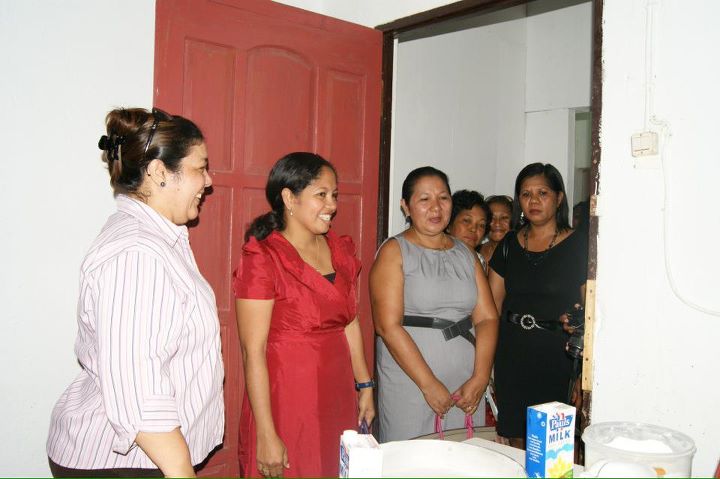
Nudar actu solidariedade no hodi buka fo apoiu no atensaun makas liu tan ba nesesidade vitima violensia domestika no violasaun sexual, liliu labarik no feto sira, iha Kinta–feira loron rua fulan Fevereiru 2012 representantes Organisasaun Popular Mulher Timor-Leste (OPMT) nudar ekipa apoiu ba ekipa susesu Lu Olo ba Presidenti, hala’o actividade social iha “Asosiasaun Casa Vida”, Bidau ou uma mahon ba vitima violensia demostica no sexual hamutuk Camarada Cidalia, esposa Kandidatu Presidenti Republika Fransisco Guteres Lu-Olo nian, Secretaria Jeral OPMT Camarada Merita Alves no mos camaradas OPMT nain seluk.

Iha visita ne’e Camarada Cidalia no Camarada Merita no maluk sira seluk hala’o visita dala uluk iha edifisiu Casa Vida ne’ebe lokalisa iha Bidau Lecidere hodi hare vitima violensia domestica no vilasaun sexual sira halao actividade hodi buka moris foun no seguro ba sira nia aan rasik iha futuru, hanesan tein no suku, nune’e mos tuir eskola alfabetisasaun. Depois ida ne’e maluk sira husi OPMT ne’e halao fali nia visita ba Casa Domin iha Bidau Tahu laran. Iha Casa Domin ne’e sira hare situasaun moris labarik ka menores neebe sai vitima ba violensia sexual.

Iha entervista ho ekipa Radio Maubere Camarada Cidalia espresa nia sentimentu profundo ba vitimas violensia domenstica no violasaun sexual ne’ebe nia hasoru iha nia visita.  Iha nia komentario Camarada Cidalia hateten katak hanesan inan ida nia sente triste los. Maibe atu kombate violensia refere nia sugere ba parte hotu-hotu tenki kolabora hamutuk atu nune’e bele prevene hahalok a’at ida ne’e.
  
Nune’e mos iha fatin refere Camarada Cidalia ne’ebe hanesan espoza husi Camarda Presidenti Lu-olo fo korajen ba vitima violasaun ne’e atu sira bele iha espiritu forte liu tan hodi halao sira moris loro- loron.
  
Camarada Cidalia hateten tan katak iha futuru mai sira sei halo asistensia ruma ba Casa Vida.

Iha oportunidade ne’e Secretario Jeral OPMT Camarada Merita Alves hateten katak nia parte apresia tebes servisu neebe sira iha Casa Vida ne’ebe oferese–an hodi halibur no tulun vitima violasaun hirak ne’e, tamba rekonstrui fali vitima sira nia futuru. Nune’e mos hanesan inan ida nia parte triste tebes hare hahalok a’at hirak ne’ebe labarik sira iha fatin nee hasoru iha sira nia uma rasik.

Camarada Merita realsa katak iha loron ruma OPMT mos sei halo kolaborasaun ho Asosiasaun Casa Vida hodi hadi’a vitima violasaun sira nia futuru.

Iha okasiaun ne’e mos vitima violasaun sexual iha Casa vida ho idade 13 ne’e expressa nia liafuan ho kontenti katak, sira nia parte senti kontinte tebes tamba hetan visita husi ekipa OPMT.

Maske ho udan ne’ebe bo’ot ekipa husi OPMT ne’ebe lidera husi Camarada Merita ho Camarada Cidalia entusiastiku tebes hodi halao nafatin visita ba vitima violasaun hirak ne’e iha fatin tolu ne’ebe la hanesan. Iha visita ne’e ekipa Radio Maubere obserba katak vitima violasaun hirak ne’e senti entusiasmu tebes hodi simu presensa husi ekipa OPMT.

Iha fulan Novembru liu ba radio maubere halo reportagem husi eventu neebe camarada Secretariu Seral Dr mari Alkatiri halau iha Hotel Arbiru hodi angaria fundus atu tulun servisu organisasaun Casa Vida nee bainhira nia selebra nia tinan. 

Tuir ajenda ekipa OPMT neebe responsabiliza ba programas visitas comunitarias husi Sra Cidalia, sira sei halao tan programa ne’ebe hanesan iha Sesta–feira loron 3 fulan Feverioru 2012 iha oras tuku 10 – 11:00 sei halao visita  labarik malnutrisaun iha HIAM-HEALTH Aimeti-laran Comoro Dili. Tuir mai iha loron hanesan iha tuku tolu lokraik ekipa OPMT sei halao tan visita ba oan kiak iha Orfanato Santa Bakita, neebe situadu iha Becora.

Ba informasaun tan dere ba +670 728 7080

Wednesday, February 1, 2012

Presidente da FRETILIN Lu Olo Candidata-se Oficialmente para as presidenciais de 2012


FRETILIN.Media
RELEASE

Dili, Timor-Leste, 31.1.2012

Presidente da FRETILIN Lu Olo Candidata-se Oficialmente para as presidenciais de 2012

Dr. Francisco Guterres Lu Olo, presidente do partido FRETILIN e ex-Presidente do Parlamento Nacional de Timor-Leste (2002-2007) entregou hoje ao Tribunal de Recursos em Díli os formulários de candidatura à eleição presidencial deste ano em conformidade com as exigências estabelecidas pela Lei de Eleição Presidencial.

A sua candidatura é apoiada por 22 970 assinaturas de votantes registados de todos os distritos e sub-distritos do país, embora a lei apenas exija o apoio de 5 000 signatários.

Foi acompanhado ao Tribunal de Recursos pelo Secretário-Geral da FRETILIN, Dr. Mari Alkatiri e os Representantes Legais da Campanha, a Secretária-Geral Adjunta e Deputada, Sra Josefa Pereira, Sra Joana Vasconcelos e Sr Luís Lobato, assim como outros dirigentes da FRETILIN.

O Presidente do Tribunal de Recurso, Dr. Cláudio Ximenes certificou a receção dos documentos exigidos ao abrigo da lei em nome do Tribunal.

"Começo como candidato do meu partido, mas serei o Presidente de todo o Povo de Timor-Leste.  Como presidente farei todo o possível para ser o símbolo e promotor da nossa soberania  e unidade nacionais,” Lu Olo disse aos jornalistas.

Dr. Lu Olo pediu a suspensão temporária do cargo de Presidente da FRETILIN durante o período de duração da campanha eleitoral e comprometeu-se que, se for eleito Presidente da República, pedirá congelamento do seu cargo de presidente do partido, para servir o Povo e a Constituição da República Democrárica de Timor-Leste imparcial e fielmente  possível como chefe de estado.

Dr. Lu Olo venceu por um número substancial de votos  a primeira ronda da eleição presidencial de 2007, com o atual Presidente José Ramos-Horta num claro segundo lugar, mas foi derrotado na segunda volta da eleição, quando Sr. Ramos-Horta  foi capaz de segurar o apoio dos outros candidatos.

"Sinto-me confiante que o povo de Timor-Leste irá escolher o próximo chefe de estado consciente e livremente.  Demonstrei uma vez já, em 2007, que sei como aceitar o seu veredicto com normalidade.  Espero de todos uma campanha positiva e construtiva, e tenho pedido a todos os candidatos para assegurarmos uma campanha de modo que vencedores e vencidos possam contribuir para o fortalecimento da paz, estabilidade e unidade nacionais.  O que o nosso povo quer acima de tudo, e plenamente merecem, é paz e estabilidade.  Cabe a todos e a cada um de nós, como candidatos a chefe de estado, garantir-lhes isto de alguma forma, sempre que pudermos em todas as oportunidades, incluindo durante esta campanha,” sublinhou Lu Olo.

Dr. Lu Olo nasceu em Ossu no distrito de Viqueque, na parte leste do país em 7 de setembro de 1954 e juntou-se à FRETILIN em 1974.  Lu Olo passou posteriormente 24 anos consecutivos, durante a ocupação Indonésia, nas montanhas e selvas de Timor-Leste lutando pela liberdade do país.

Depois do referendo patrocinado pelas NU de 1999, que resultou na retirada da Indonesia, Lu Olo deixou os seus tempos de resistência armada para trás e concentrou-se na construção do seu partido FRETILIN, que ele já liderava desde 1997. Eleito seu Presidente em 2001, levando no mesmo ano a FRETILIN à vitória nas eleições para a assembleia constituinte.  Reeleito desde então para o cargo mais alto da FRETILIN por duas ocasiões, em Maio de 2006 e Agosto de 2011, a última através da primeira  eleição direta da liderança do partido pelos seus membros a acontecer pela primeira vez em Timor-Leste.  Mais de 165 000 membros da FRETILIN votaram nestas eleições nacionais internas do partido realizadas no dia 20 de Agosto de 2011.

Dr. Lu Olo tem dedicado os últimos seis anos aos estudos para uma graduação em direito e, estará admitido para praticar advocacia em Abril deste ano.  Será o primeiro veterano da resistência armada em Timor-Leste a consegui-lo.

Lu Olo é casado com Cidália Lopes Guterres, e o casal tem três filhos, Francisco Cidalino Guterres (Olo Kai), Eldino Nobre Guterres e Felezito Samora Guterres.

PARA MAIS INFORMAÇÕES POR FAVOR CONTACTAR JOSÉ TEIXEIRA NO NÚMERO  +670 728 7080


FRETILIN President Lu Olo Officially Nominates for Timor's 2012 Presidential race


FRETILIN.Media RELEASE

Dili, Timor-Leste, 31.1.2012

FRETILIN President Lu Olo Officially Nominates for Timor's 2012 Presidential race

Dr. Francisco Guterres Lu Olo, FRETILIN's party president and former Speaker of the Timor-Leste National Parliament (2002-2007) today filed his nomination forms as a candidate for this year's presidential election with the Court of Appeal in Dili as required by the Presidential Election Law.

His nomination is supported by signatures from 22,970 registered voters from every district and sub-district in the country, despite the law only requiring 5,000 signatories in support.

He was accompanied by FRETILIN Secretary General, Dr. Mari Alkatiri and his Campaign Legal Representatives, FRETILIN Assistant Secretary General and MP, Ms Josefa Pereira, Ms Joana Vasconcelhos and Mr. Luis Lobato, as well as other FRETILIN leaders.

The President of the Court of Appeal, Dr. Claudio Ximenes certified receipt of the documents required under law on behalf of the the Court.

"I start out as my party’s candidate, but will be President for all the People of Timor-Leste.  As president I will do my utmost to be the symbol and promoter of our national sovereignty and unity," Lu Olo told journalists.

Dr. Lu Olo has sought temporary leave from his post of President of FRETILIN for the duration of the elections and has undertaken that if elected as President of the Republic, he will seek the suspension of his post as party president, to serve the People and Constitution of the Democratic Republic of Timor-Leste as impartially and faithfully as he can as head of state.

Dr. Lu Olo won by a substantial number of votes the first round of the 2007 presidential election, with current President Jose Ramos Horta coming a clear second, but was defeated in the run off election, when Mr. Horta was able to secure the support of the other candidates.

"I feel confident that the people of Timor-Leste will determine the next head of state in good conscience and freely.  I have shown once already in 2007 that I know how to accept their verdict gracefully.  I look forward to a positive and constructive campaign from everyone, and have called on all candidates to ensure that we campaign and win or lose in a way that contributes to strengthening peace, stability and national unity.  What our people want most of all and fully deserve is peace and stability.  It is up to each and everyone of us as head of state candidates to provide this in any way we can at every opportunity, including during this campaign," Lu Olo stressed.

Dr. Lu Olo was born in Ossu in Viqueque district in the country’s east on 7 September 1954 and joined FRETILIN in 1974.  He subsequently spent 24 years during the Indonesian occupation in the mountains and jungles of Timor-Leste fighting for the country’s freedom.

After the 1999 UN sponsored referendum that resulted in Indonesia's withdrawal, Lu Olo left his armed resistance days behind him and concentrated on building his party FRETILIN, which he had led since 1997.  He was elected its President in 2001, that same year leading FRETILIN to victory in the constituent assembly elections.  He has been re-elected to FRETILIN’s top job on two occasions since, in May 2006 and in August 2011, the latter by way of Timor-Leste's first direct election by party members of its leadership.  Over 165,000 FRETILIN members voted in the internal national party elections held on 20 August 2011.

Dr. Lu Olo has spent the last six years studying for a law degree and will be admitted to practice law in April this year.  He will be the first veteran of the armed resistance in Timor-Leste to have done so.

Lu Olo is married to Cidália Lopes Guterres, and the couple has three children, Francisco Cidalino Guterres (Olo Kai), Eldino Nobre Guterres and Felezito Samora Guterres.

FOR FURTHER INFORMATION PLEASE CALL JOSE TEIXEIRA ON +670 728 7080